
How to Help Preschoolers Count Objects, Not Just Say Numbers
Help preschoolers connect number words with real quantities using a small set of objects, counting-book pictures and simple games without worksheets.
How to Help Preschoolers Count Objects, Not Just Say Numbers
To help a preschooler count objects, begin with a small group, move or point to each item once, and say one number word for each item. When you finish, name the total: “One, two, three. There are three.” Saying a long counting sequence is useful practice, but it does not by itself show that a child can count a group accurately.
What does counting a group involve?
Stanford DREME’s Counting at a Glance explains three connected ideas: using number words in order, pairing one word with each object, and understanding that the final number gives the group’s total. The second idea is called one-to-one correspondence; the third is cardinality.
You do not need to use those terms with your child. Show the action and describe the result. Start with two or three objects if a larger group is difficult. A small successful count gives you something concrete to discuss.
Try the move-and-count method
Put three large, age-appropriate toy blocks on one side of a mat. Slide one to the other side as you say “one,” then move the next while saying “two,” and the last while saying “three.” Sweep your hand toward the counted group and say, “Three blocks altogether.”
Invite your child to take a turn. Leave space between the blocks so each is easy to track. Use suitable materials and supervise; there is no need for small counters or beads.
Three original counting invitations
These activities were created for this article. They are separate suggestions, not claims about exercises included in a particular product.
- A parking space for each vehicle: Draw three broad parking spaces. Ask your child to park one large toy vehicle in each, then count the vehicles together. If you add a fourth vehicle, ask whether another space is needed.
- A picture-to-block match: Choose a book illustration with a small, clearly identifiable group. Count only that group, then make a matching collection of blocks. Say exactly what you are counting: “These three flowers,” rather than everything on a busy page.
- A delivery request: Ask for two blocks to build a pretend doorstep. Let your child select and deliver them. Count the delivered group together, then swap roles so they choose your next request.
When counting goes off track
A block gets counted twice: Move counted objects into a separate area. Model one slow count before offering another turn.
A number word is skipped: Count together, matching your pace to the child’s movement. Reduce the group if needed.
Your child recounts when asked “How many?”: Allow the recount, then connect the final word with the whole group: “You ended at four. Four blocks.” Keep this a conversation rather than a repeated test.
Choosing a book for counting practice
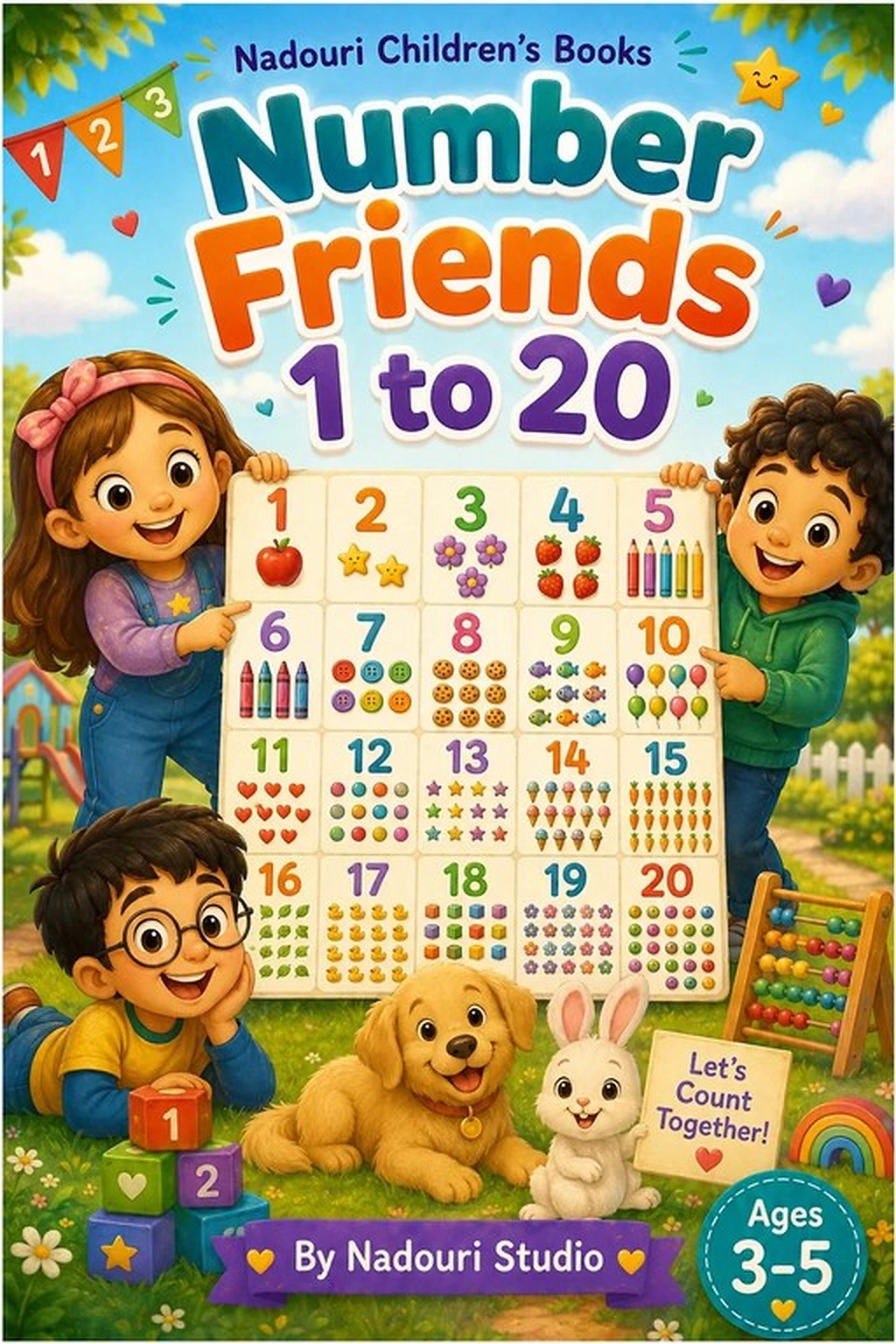
Our Number Friends 1 to 20 listing describes counting with number characters. Check the current previews before choosing a page. For this activity, select a small group whose objects you can identify and count clearly; a title that reaches twenty does not mean you must practice twenty at once.
Teachers can use the same invitation with different group sizes, giving each child space to move their own objects. Families can start with materials already at home. Explore other titles in the Early Learning collection when you want a new picture theme.
Finish by naming what your child counted: “You brought three blocks for our doorstep.” Connecting a number with a real purpose gives the next counting turn a reason to happen.