
How to Help a Child Retell a Story Using Pictures
Help an early reader retell a story by choosing three pictures, naming what happened first, next, and last, and supporting ideas without turning it into a test.
How to Help a Child Retell a Story Using Pictures
The simplest way to help a child retell a story is to choose three pictures and talk through what happened first, next, and last. Let the child point, gesture, or use short phrases. Your job is to help them connect events—not to test whether they can repeat every sentence.
Why begin with pictures?
Pictures reduce the amount a child must hold in mind at once. They provide concrete clues about characters, setting, actions, and changes. For kindergarten and early-primary readers, the U.S. Institute of Education Sciences recommends teaching comprehension strategies and using focused, high-quality discussion. The three-picture routine below is an original home-and-classroom adaptation of those ideas; it is not a quoted lesson from the guide. See the official What Works Clearinghouse practice guide.
The three-picture retelling routine
- Choose a beginning picture. Ask, “Who is here, and what is happening?”
- Choose a middle picture. Ask, “What changed or what problem appeared?”
- Choose an ending picture. Ask, “How did things finish?”
After discussing each picture, invite one connected retelling: “Tell me the story from these three pictures.” If needed, supply only the linking words: first, next, and finally.
Helpful responses without turning it into a quiz
| If the child… | Try saying… |
|---|---|
| stays silent | “Point to who we should talk about first.” |
| mixes up the order | “Let’s look at the first picture again. What had not happened yet?” |
| adds imaginative details | “That is your new idea. What happened in the book, and what did you invent?” |
| quotes only one line | “Good memory. What happened before that line?” |
A different wording is not automatically wrong. Look for the main characters, an important event, and a sensible order. Correct gently only when the child’s version changes a key event from the book.
Three original retelling extensions
These are original activity suggestions, not claims about any particular book.
- Picture cards: draw three simple boxes, sketch one event in each, mix them, and rebuild the order.
- Toy retell: use three household objects as characters and move them while telling the story.
- Two endings: retell the real ending first, then invent a clearly labeled “new ending.”
Choose a picture book with clear visual changes
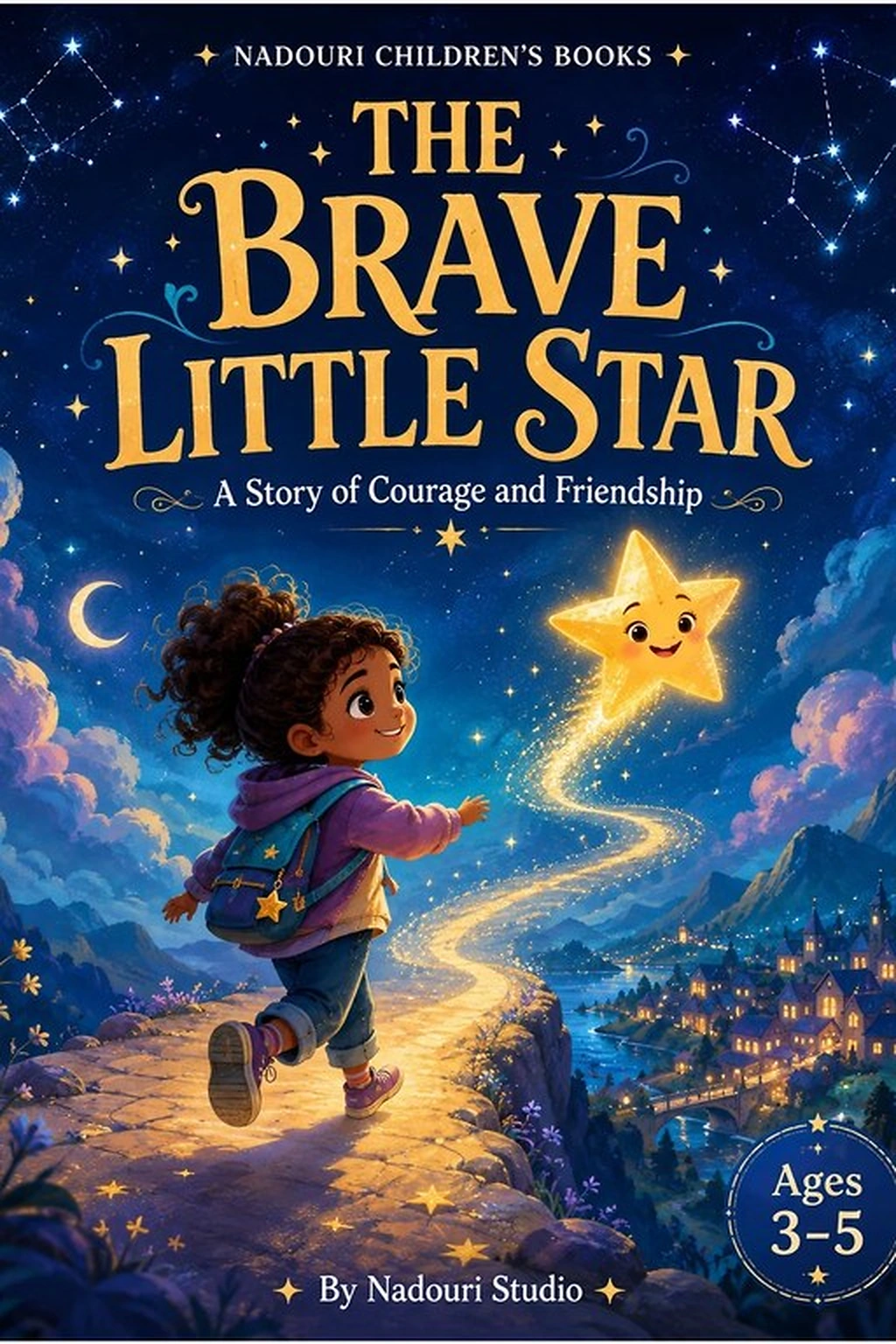
A book with recognizable characters and visibly different moments makes the routine easier. The Brave Little Star is listed for ages 3–5 and shared reading; preview it to decide whether its story and illustrations suit your child. You can also browse the verified Bedtime & Picture Books collection.
Keep the routine short
One retelling is enough. Stop while the child is still engaged, thank them for the version they told, and return to the activity another day. A brief, supportive conversation is more useful than pushing for a perfect performance.