
How to Use English–Arabic Books When You Speak One Language
Use an English–Arabic children’s book confidently even if you speak one language. Follow a picture-first plan and find reliable help with unfamiliar words.
How to Use English–Arabic Books When You Speak One Language
You can share an English–Arabic children’s book without speaking both languages fluently. Begin with the language you know, talk about the pictures, and get reliable help with a small amount of unfamiliar text. You do not have to read every line twice or turn book time into a translation exercise.
Check how the book uses two languages
A bilingual book might put translations beside each other, introduce a few words within a story, or have separate editions. Head Start’s How to Use Bilingual Books guide explains that the format affects how adults use a book. Its suggestions include exploring pictures in the home language, choosing a small vocabulary focus, and using different languages on different reading days.
Before buying, inspect a preview. Is this a story or a picture vocabulary book? Is the unfamiliar language readable to you? Are pronunciation guidance or audio actually available? Check the listing rather than assuming every bilingual title includes them.
A picture-first plan to try at home
The following plan and examples are original suggestions for this article. They are not a prescribed teaching program or activities promised inside a product.
- Choose one inviting picture. Let your child point to something interesting. Describe it in the language you speak comfortably.
- Connect it with everyday life. If the picture shows a cup, find a real cup and talk about what it is used for. This example works without requiring that exact picture in your chosen book.
- Add one verified word. If you have checked its meaning and pronunciation, introduce the word in the other language. Say it naturally and invite participation without demanding repetition.
- Return to the meaning. Use the familiar language to continue the conversation. The new word does not need to replace everything your child already knows.
What if you cannot read or pronounce the Arabic?
Ask a fluent speaker to check the selected word or passage before sharing it. In a classroom, arrange this with a willing family member or colleague rather than making a child responsible for translating for the group.
Transliteration represents words using a different writing system; it is a reading aid, not a guarantee that a beginner will pronounce every sound accurately. If a book includes audio, confirm it belongs to that edition. Avoid inventing pronunciations from an unfamiliar spelling or assuming a general translation app is the book’s official recording.
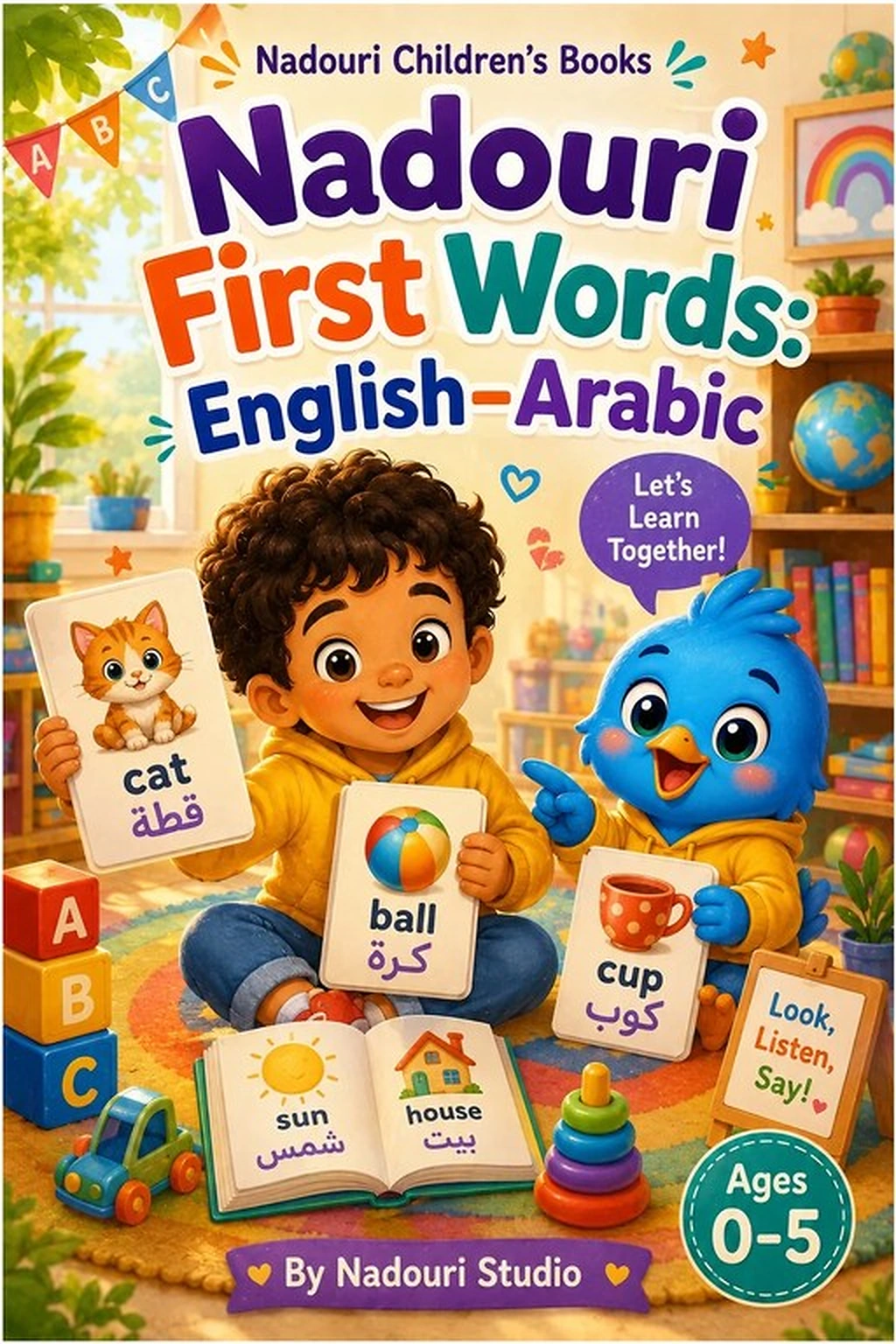
Our Nadouri First Words: English–Arabic listing describes everyday words in both languages with transliteration. Review the current samples to see whether its presentation suits your family. Browse the English–Arabic Books collection to compare titles.
Do you need to read both languages every time?
No fixed two-language sequence is required for these suggested activities. You might use the familiar language today, then revisit the same pictures with a speaker of the other language another day. Follow the child’s interest and the help available to your family.
Head Start’s home-language guidance emphasizes continuing to develop a child’s home language while supporting English. Learning another language does not require abandoning family conversation in the language you know best.
If the child answers in a different language
Respond to the meaning you understand. Invite pointing or showing if you are unsure, and ask a fluent adult for help with unfamiliar words. Avoid treating every answer as a translation quiz.
For the next reading, choose one picture, one comfortable conversation, and perhaps one word you have checked. A bilingual book can be a shared place to explore, even when the adults are learning too.