
Same Objects, Different Rules: A Simple Sorting Game for Preschoolers
A simple preschool sorting game: choose a rule, explain each choice, and regroup the same objects.
Same Objects, Different Rules: A Simple Sorting Game for Preschoolers
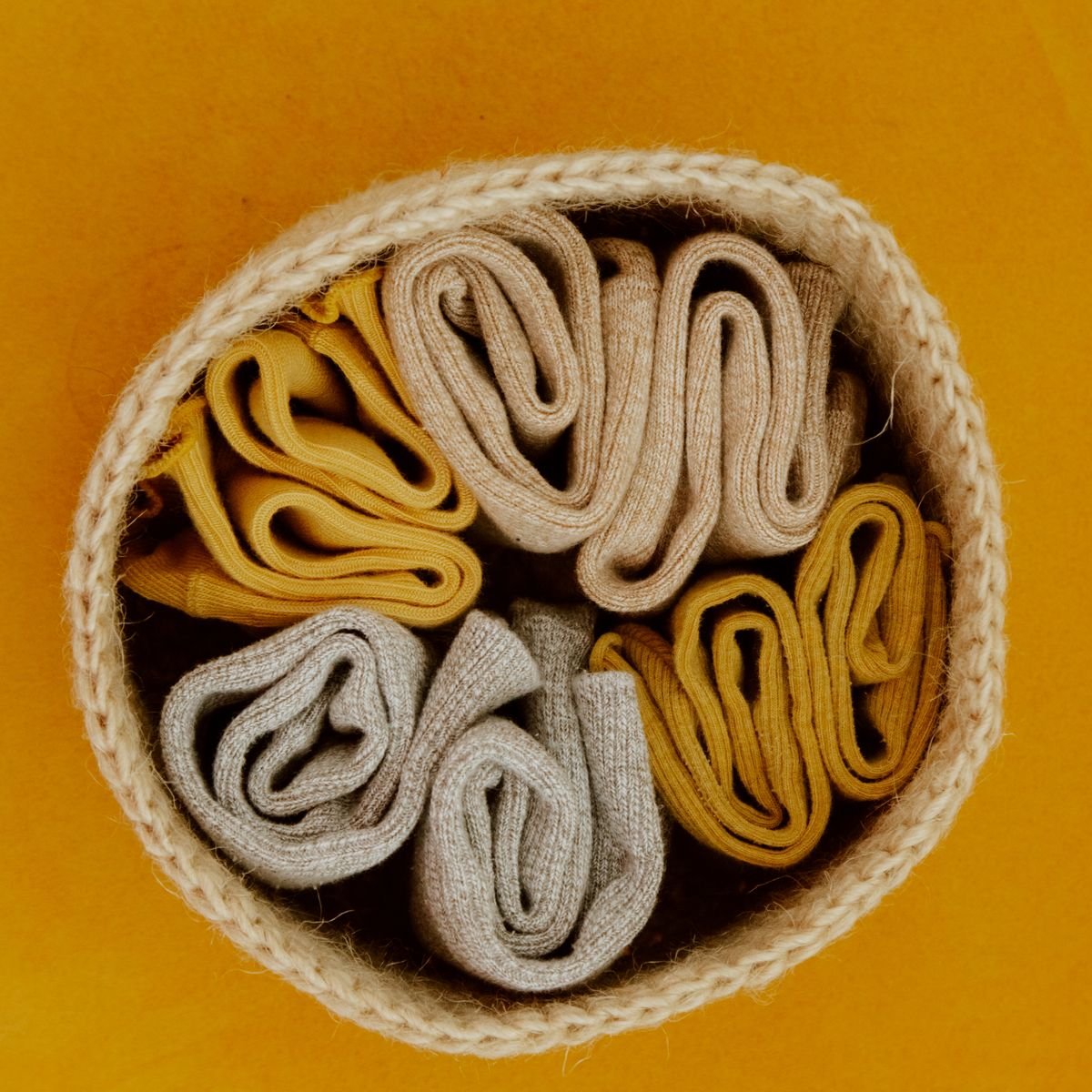
A striped sock can belong with other blue things or with other striped things. Neither choice is automatically wrong: the useful question is which rule your child is using. A simple sorting game gives you a way to explore that idea without worksheets or a race to finish.
Choose one clear rule
Sorting means putting items into groups according to a shared feature. NAEYC’s guidance on sorting activities describes comparing characteristics and regrouping the same objects in different ways. It recommends beginning with one characteristic at a time.
Try the original household activity below with clean socks and two empty spaces on a table or floor. Choose items your child can handle comfortably, without loose decorations. Stay alongside the child and put the materials away afterward.
Play “same things, new rule”
- Start with a small collection. Select a few socks with clearly different features, such as plain and striped patterns. You do not need matching pairs.
- Name the first rule. Say, “Stripes here, no stripes here.” Place one example in each space and let your child place the next item.
- Ask for the reason. Try, “What made you choose that group?” Accept pointing or showing you the stripes instead of a spoken answer.
- Check together. Look through one group and ask whether every sock fits its rule. Move an item together if needed.
- Reset before changing the rule. Mix the socks again. This time, try long and short, using examples with an obvious difference. Explain that the objects stayed the same but the rule changed.
When an item could go either way
A sock with several colors can make a color rule confusing. Set that one aside at first rather than forcing a single answer. Later, invite your child to suggest a clearer rule: “Has blue on it” and “Has no blue on it” is different from “Only blue” and “Not only blue.” These are examples you can adapt, not a test with a prescribed score.
If your child quietly switches from pattern to size halfway through, describe what you notice: “You put this one here because it is long. Were we checking length or stripes?” Return to the first example. You can also finish their new grouping and discuss its rule rather than immediately correcting it.
Make it easier or add a challenge
For an easier version, use only three or four items and demonstrate each choice. For a child who wants more, let them sort first while you guess their rule. Ask permission before adding an item to see whether it belongs. Avoid increasing the number of objects just to keep the activity going.
Once the groups are ready, counting is an optional separate step. Our guide to counting objects with preschoolers explains how to match one number word to each item. Keep the comparison friendly; a smaller group is not a losing group.
Finish with one useful observation
Say something specific, such as, “You checked the pattern before choosing a space.” Then let your child help return the socks. This can fit into a short screen-free routine, but there is no required duration or number of successful turns. The conversation about the rule is the point.