
How to Choose Coloring Pages for Preschoolers
Choose preschool coloring pages by picture size, detail and your child’s interests. Includes simple adaptations and ways to keep coloring pressure-free.
How to Choose Coloring Pages for Preschoolers
Choose coloring pages with generous spaces, clear outlines and a subject your preschooler wants to explore. Start with a manageable picture, offer blank paper alongside it, and adjust the detail to your child’s interest rather than treating an age label as a test. A page that invites a child to begin is more useful than one they feel they must finish.
Look at the picture before the age label
When browsing a book, inspect its sample pages. Imagine where your child’s crayon would move: are there broad areas to explore, or many tiny sections crowded together? A familiar animal or vehicle can provide a starting point, while a busy scene may suit a child who enjoys searching for little details.
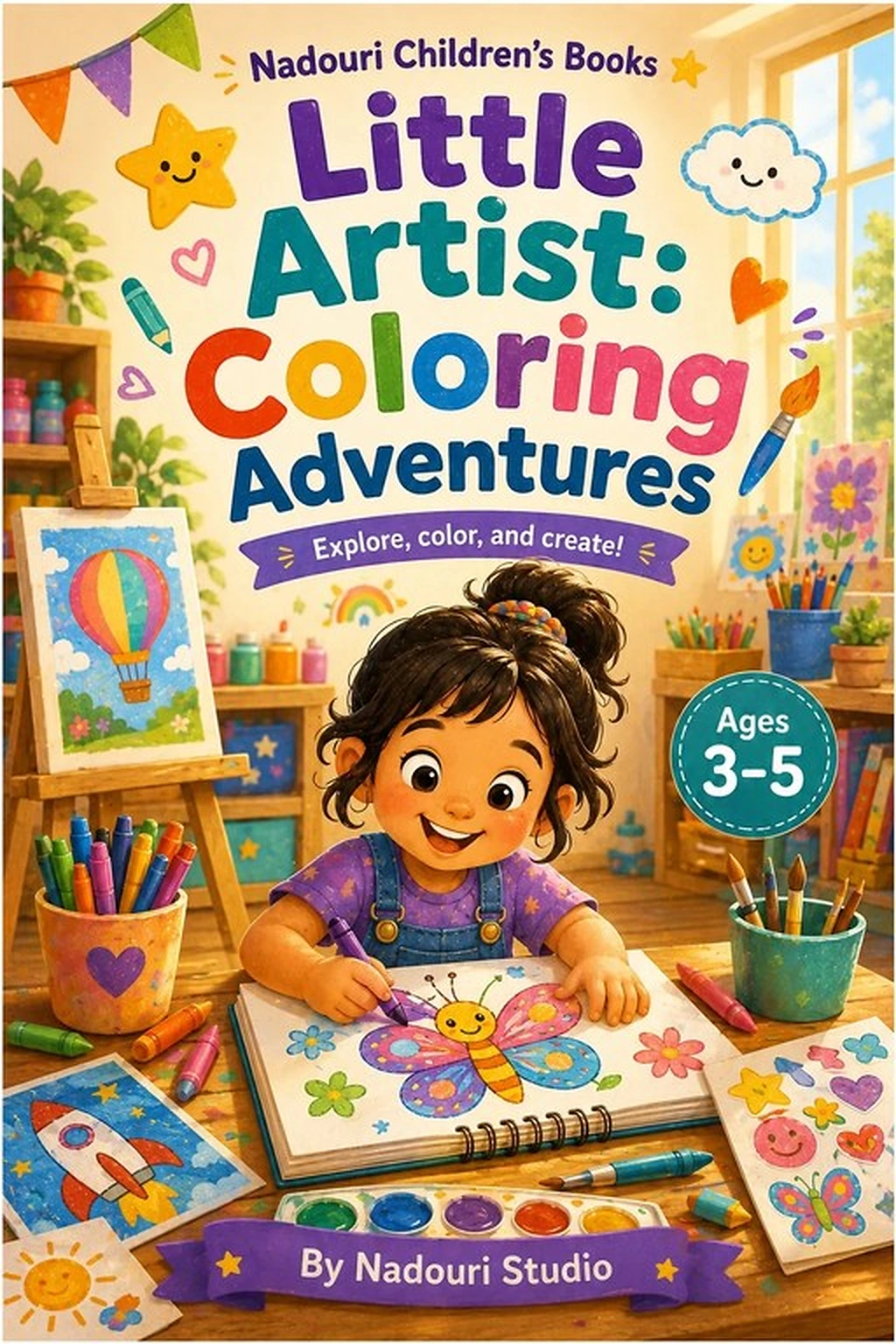
Our Little Artist: Coloring Adventures listing describes big, bold illustrations. View its previews to judge the actual pictures before choosing. The Coloring Books collection offers other options to compare.
Use a quick selection checklist
- Open spaces: Can your child find one area they want to color without tackling the entire scene?
- Clear shapes: Are the main objects easy to distinguish?
- Personal interest: Would your child choose this subject when offered two pictures?
- Comfortable materials: Offer crayons or pencils your child finds easy to use, with paper resting on a steady surface.
- Room for invention: Can they add a background, unusual colors or their own marks?
These are practical selection suggestions, not a scoring system or a developmental assessment.
Should children stay inside the lines?
You can demonstrate careful coloring if a child asks how, without making neatness the condition for enjoying the page. Let them choose colors and decide when to stop. If a purple tiger or a scribbled sky is their plan, ask about the idea rather than correcting it.
NAEYC’s guidance on creativity distinguishes adult-directed, predetermined artwork from open-ended exploration and recommends providing blank paper and varied drawing materials. Coloring pages can be one optional activity; they should leave room in a child’s day for drawing freely, too.
Try three original ways to adapt a page
The following invitations are our own activity suggestions. They are not claims about activities included in a particular book.
- One favorite corner: Invite your child to choose a single part of a busy scene. Leave the rest uncolored, or return to it another day.
- Color, then invent: After coloring an animal, offer separate blank paper for an imaginary place it might visit. A few marks and a spoken story are enough.
- Two possible skies: On blank paper, explore colors for a stormy sky and a sunny sky. Let your child decide whether either belongs in their picture.
What if your child refuses or gets frustrated?
Offer a simpler picture, a different drawing tool, or blank paper. Ask whether they want company, help keeping the paper steady, or a break. Avoid taking over to produce a finished page.
In a classroom, offer the same choices without displaying one “correct” example for everyone to copy. Children may enjoy different levels of detail within the same group.
Keep the next choice small: two pictures and a blank sheet. Watch which option your child returns to willingly, then use that interest to guide the next selection.