
A 15-Minute Screen-Free Activity Routine for Kids Ages 3–8
Build a flexible 15-minute screen-free routine with drawing, puzzles and storytelling. Includes age adaptations, a weekly rotation and simple ways to handle frustration.
A 15-Minute Screen-Free Activity Routine for Kids Ages 3–8
A simple screen-free activity routine can start with two choices, one short task and a chance for your child to show what they made. Put paper, crayons and a suitable book on the table, invite them to choose, and help them begin. You do not need a new craft project every day.
The 15-minute plan below is a suggested family routine, not a research-based time limit or a requirement. Shorten it, extend it or skip a step to suit the day. It is designed for children ages 3–8, with different ways to adjust the same activity for younger and older children.
Prepare a small activity basket
Keep a few materials together so getting started takes little preparation:
- Plain paper and washable crayons or pencils.
- One book with an activity your child can understand.
- A few large paper shapes for arranging and drawing around.
- A simple place to keep finished pictures and unfinished projects.
Choose materials appropriate for your child and supervise as needed. If a page requires scissors or extra supplies, prepare those separately rather than putting everything in front of the child at once.
The flexible 15-minute plan
| Suggested time | What to do | Example invitation |
|---|---|---|
| First 2 minutes | Offer two choices and explain the first step. | “Would you like to draw a creature or try a puzzle?” |
| Next 8 minutes | Work on one activity, helping when needed. | “Let’s try the first part together.” |
| Next 3 minutes | Share, tell a story or add a detail. | “Tell me about the place you made.” |
| Last 2 minutes | Put materials away and decide what to save. | “Shall we keep this to finish another day?” |
If your child becomes absorbed in a drawing, the clock does not need to interrupt it. If they are tired after five minutes, put the project away and return another time. The timetable is there to make planning easier for you.
Choose one main activity
Drawing: finish a surprising shape
Draw one large circle and invite your child to turn it into something. It could become an animal, a planet or a pretend machine. Start a separate picture yourself if they want company, allowing each drawing to develop differently.
For a younger child, ask about one feature: “What could go inside the circle?” For an older child, suggest two versions of the same shape or ask them to invent a name for their creation.
Puzzles: show the first move
Choose a puzzle with clear instructions and a manageable layout. For a maze, identify the start and finish together before making any marks. Let your child try a route with a finger, then use a pencil if they want.
If the page is frustrating, cover part of it, choose an easier one or solve a small section together. An older child could draw a new maze on plain paper and challenge you to solve it.
Storytelling: give a picture a problem
Look at a picture in a book or at your child’s drawing. Ask three questions: Who is here? What do they want? What happens next? A child can point, act out the answer or tell you a sentence.
Write down their words if they would like a record of the story. An older child might add speech bubbles or make a second picture showing how the problem is solved.
Using an activity book without rushing through it
An activity book can reduce the work of inventing a starting task. Look at the page before inviting your child to begin: are the instructions clear, is the challenge suitable, and do you have the materials?
Our Nadouri Screen-Free Activity Book is described in the store as a mix of puzzles, drawing prompts and hands-on projects. Check its current previews and product details to decide whether it matches your child’s interests. The routine in this article is a separate suggestion; it does not require every activity to appear in that book.
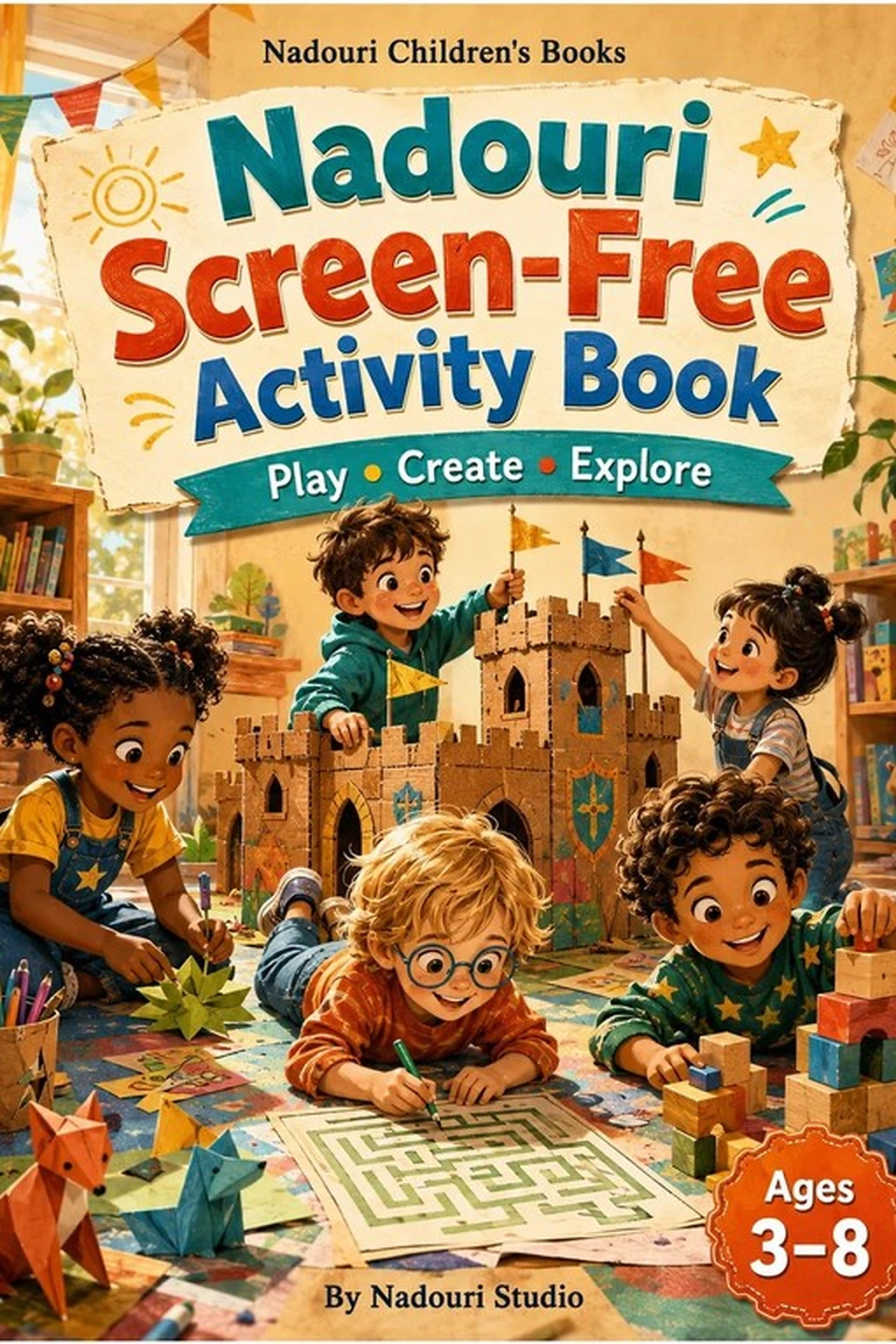
You can also browse the Activity & Coloring collection. Pick a book for the type of activity your child enjoys rather than trying to finish the largest number of pages.
Keep variety simple
Use a loose weekly rotation: drawing on one day, a puzzle on another, a picture story next, then a favorite repeat. Leave another day open for your child’s choice. Reusing the same materials can still produce a different picture or story.
Head Start’s activities handbook for families offers examples of learning through everyday play and asks adults to reflect on what children enjoyed and whether a challenge was too easy or too hard. Use those questions when deciding what to repeat or change.
When the routine is not working
“I don’t want to.” Offer a smaller invitation, such as choosing a crayon or naming a character, and accept that another time may work better.
“This is too hard.” Demonstrate one step, simplify the task or switch pages. Ask whether they want help before taking over.
“I finished.” Invite an optional extra detail, a new ending or a chance to explain the work. Finishing does not have to create another assignment.
Two children need different challenges. Use a shared theme with different tasks. One child can draw a garden creature while the other writes its name or invents a short story about it.
Common questions
Should we complete a page every day?
You can leave a page unfinished. For this routine, success means finding an activity worth returning to, rather than reaching a daily page quota.
Does the child have to work independently?
No. You can start together, stay nearby or share the activity throughout. Adjust your help to the task and the child’s needs.
Do we need a printer?
No. Plain paper, an existing book and crayons are enough for the ideas above. If you choose a digital product, check its listing for its actual format and printing details before buying.
For your next session, set out two choices and try just the opening step. Keep the activity your child enjoys, simplify what causes frustration, and let the routine grow around your family.