
7 Playful Alphabet Activities for Preschoolers Ages 3–5
Try seven simple alphabet activities with an alphabet book, paper and crayons. Help preschoolers explore letters through play, pictures and everyday conversation.
7 Playful Alphabet Activities for Preschoolers Ages 3–5
To introduce letters to a preschooler, start with a letter that means something to them, such as the first letter of their name. Look at it together, say its name, and turn the discovery into a short game. You can use an alphabet book, a sheet of paper and a few crayons; you do not need to complete a whole workbook in one sitting.
These seven alphabet activities for preschoolers are practical ideas for families with children ages 3–5. Choose one activity at a time and adjust it to your child’s interest. They are invitations to play, rather than a test or a promise that a child will learn to read by a particular date.
What are you helping your child notice?
Recognizing a letter, naming it and connecting it with a sound are related tasks, but they are not identical. A child might spot the letter M before they can name it. Head Start’s guide to alphabet knowledge and early writing describes learning about letter names and sounds, alongside the progression from making marks to forming letters.
For a home activity, choose a small goal: finding one familiar letter, matching two shapes or talking about one picture. The activity ideas below are our suggested ways to put that small goal into practice.
1. Make a name-letter detective game
Write your child’s name in large, clear letters. Point to its first letter and name it. Then look together for the same letter in a book title or on a familiar label. Say, “Here is M in Maya. Can we find another M?”
Start with letters that use the same shape and case. Once that feels familiar, show an uppercase and lowercase pair. Some pairs, such as A and a, look quite different, so explain the connection instead of expecting your child to guess it.
2. Turn one alphabet-book page into a conversation
Open an alphabet book to one page. Name the featured letter, talk about the picture and invite your child to point to something interesting. For a garden theme, you might discuss a flower’s color or imagine who could live beneath a leaf.
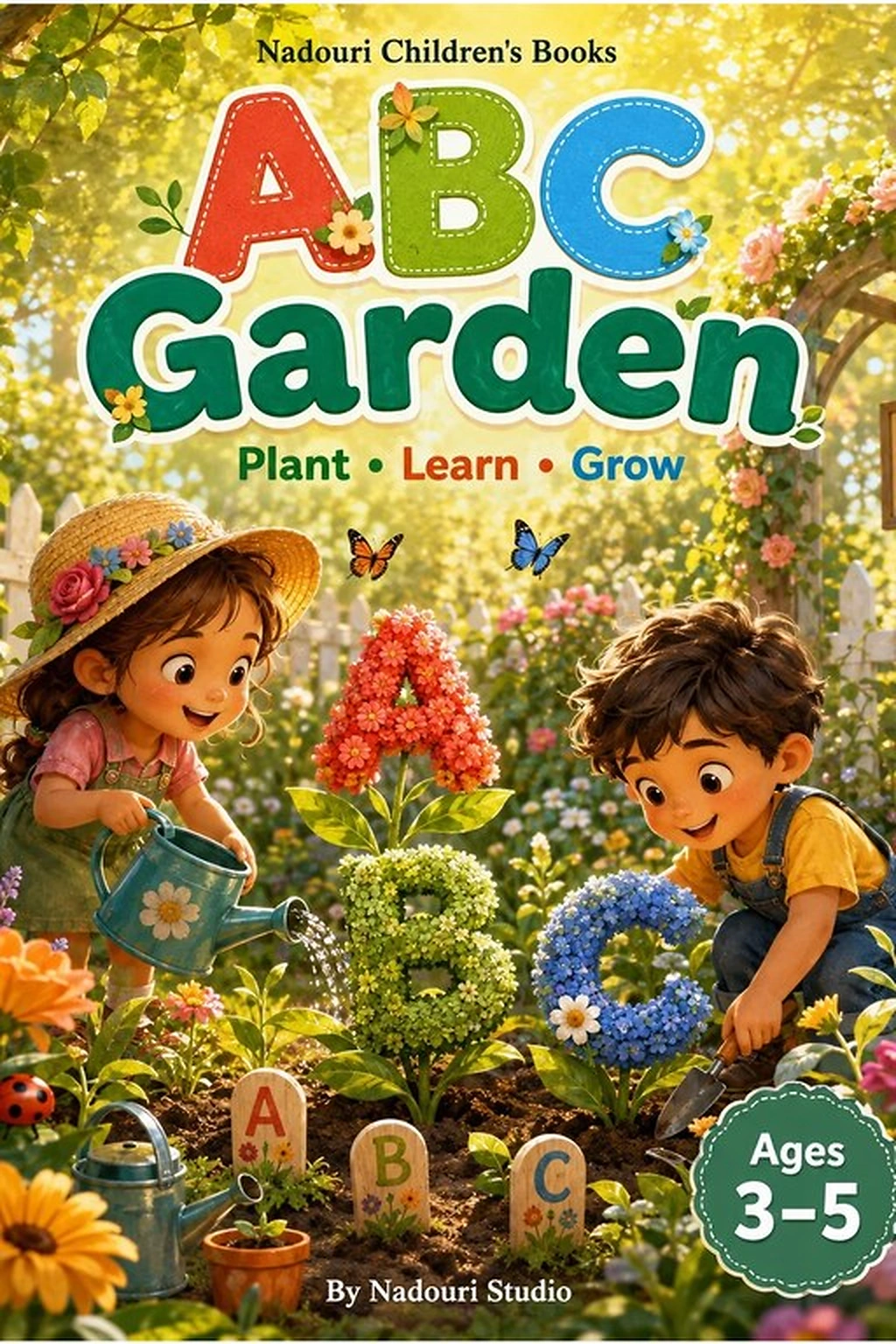
ABC Garden is a garden-themed alphabet title in our Early Learning collection. A book gives you a starting picture; your questions and your child’s ideas can take the conversation beyond the page.
3. Build a letter with paper strips
Draw a large L on paper and make a second L with two broad paper strips. Talk about the long line and the short line. Let your child move the strips and compare their shape with the drawn letter.
For a curved letter, use a broad strip you can bend or simply trace the curve with a finger. Choose large, child-appropriate materials and stay nearby. The aim is to explore the shape, so a slightly crooked letter is welcome.
4. Match a tiny set of letter cards
Make two cards each for three letters your child has encountered. Lay out one set and offer a card from the other. Ask, “Which one looks the same?” Begin with all cards face up.
If six cards feel like too much, use only two matching pairs. To change the challenge later, match uppercase letters with their lowercase partners, explaining each pair as you introduce it.
5. Play a first-sound picture game
Draw a sun, a sock and a moon. Say each word naturally, then draw attention to its first sound. Ask which two start with /s/. You can model the answer first: “Sun and sock start with the same sound.”
Distinguish the letter name from the sound: the letter S is named “ess,” while the starting sound in sun is /s/. Keep early examples straightforward rather than introducing several spellings or pronunciation rules at once.
6. Make a pretend garden sign
Invite your child to draw a garden and choose a name for it. Write their chosen name on a separate piece of paper while they watch. They can add their own marks, a familiar letter or a drawing to a sign.
Ask what their sign says and listen to the answer. You can write their exact words underneath. This gives the marks a purpose without requiring perfectly formed letters or correct spelling.
7. Let your child lead the letter hunt
Return to a familiar book and swap roles. Your child chooses a letter for you to find. Think aloud as you look: “This one has a straight line, but I am looking for a curve.” Let them help you.
Finish by asking which letter they would like to explore next time. If they choose the same one again, change the game around that letter rather than insisting on a new page.
A simple way to fit the activities into your day
Pick one letter and one game, put the materials within reach, and begin together. A short session can end with your child showing their favorite discovery. There is no required number of minutes or pages; stop or switch activities when the game no longer feels enjoyable.
Common questions
Do we have to teach the alphabet in A-to-Z order?
For these games, you can begin with a familiar letter from a name or favorite book. An alphabet song can still be fun, but recognizing a particular letter is a different task from singing the sequence.
What if my child does not want to trace letters?
Use the picture conversation, matching game or pretend sign instead. You can return to tracing another day. Drawing and talking can remain part of your shared book time.
Can we use our home language?
Yes. Talk about the pictures in the language your family uses comfortably. When exploring English letters, name the English example word clearly; if your home language uses a different writing system, introduce its symbols as their own system rather than assuming each one has a direct English equivalent.
Choose one of the games to try with a book you already own, or explore ABC Garden and its current product details. One familiar letter and a shared conversation are enough to begin.